
STORY WORKSHOPS FOR TEAMS
The stories your team needs are already in the room.
Your team does good work, but your stakeholders don’t really understand what they do or why it matters.
Through interactive story workshops and coaching, I help teams explore the stories worth telling, then shape them to inspire your stakeholders to take action.
You'll not only move your important mission forward, but you’ll also build a lasting story skill that can be used across your work.
TRUSTED BY TEAMS AT
Airbnb
·
Deloitte
·
Stanford
·
Activision Blizzard
·
Meta
·
The Redford Center
·
Dream.org
·
Irresistible Foods
·
Wabtec
·
The Battery
·
Airbnb · Deloitte · Stanford · Activision Blizzard · Meta · The Redford Center · Dream.org · Irresistible Foods · Wabtec · The Battery ·
YOUR STORY PROBLEM
Everyone on your team is telling a different story.
You already know you need a better story about this work. Someone above you may have told you so directly.
The problem is not that your people cannot communicate. It is that five of them describe the same work five different ways to five different stakeholders, and nobody ever gave them a shared way to do it. No cohesive narrative. No shared story skills. Just a lot of capable people doing their best, separately.
And it has gotten harder for real reasons. Meetings are cut-off heads on Zoom. You are rarely in a room together. Most of what gets communicated happens asynchronously on Slack or in decks. And everyone wants to get the information fast, so the work gets compressed into boring bullets and stats.
So we reach for AI to fill the gap. It drafts fast and it drafts fine, but it keeps missing the part that would have made anyone care.
You're team is not short on stories.
You're short on the time to find them and the structure that make them land.
If you just read that and thought about three people on your team, you are in the right place.
The shift
Most storytelling training teaches delivery. This is the deeper, more human work.
I got a call from a director at an environmental nonprofit. Her team had already sat through a storytelling training. Two hours, one slide deck, somebody from an agency talked to them in general terms about messaging and presentation skills, and then it was over. Her team came out of it the way they went in. They still could not talk about their own work confidently.
That training was not bad. But it was aimed at the wrong thing. It went straight to delivery, which is the part you polish. Nobody had asked the first question yet, which is what are we actually trying to say. You cannot polish a story you have not found.
Storytelling is actually two words. Story +Telling.
THE LAST 20%
Telling.
The part most everyone trains for, the tactics for crafting the perfect deck, talk, or email. You focus on polishing the output without ever questioning if the story underneath actually works. Sure, this is still an important skill, but it is also the part AI is getting very good at.
THE OTHER 80%
Story.
Everything underneath it. Searching for the experiences that connect us to something bigger, then learning how to communicate what actually happened, what it really means, and (most importantly) why anyone should care. This exploration part is still entirely human.
Most teams go looking for help with the telling, because that is the part that feels broken. The part that is actually broken is upstream of it.
This is why I teach teams to be Story Explorers before they are storytellers.
Storytellers perform. Story Explorers get curious, ask better questions, find the thread that connects the work to something bigger, and then share what they found in a way that moves their intended audience to take action.
Your team already has the material. This is the work of going and finding it.
THE PROOF
What changes after a story workshop
I survey before and after, so this is not just a warm, fuzzy feeling. It is what the teams reported. Every number below comes from identical surveys taken by every participant before the work and again after it.
+41%
How connected people felt to colleagues across a global communications team.
Global rail technology company
+35%
Confidence crafting stories that persuade and inspire people to take action.
Major healthcare company
8.8/10
How confident a team felt asking story-based questions that open up a real conversation and build relationships
Environmental film nonprofit
"There's a difference between something that's checklist-useful and something that really invites you to think differently, to be modified by the process itself. The process Liz took me through was truly transformative."
Tatiana
Major consulting firm
"After this workshop with Liz, I will approach storytelling as an effort to influence not only the way my audience thinks, but also how they feel and act. Much more of a holistic effort than I probably took previously."
Genna
Major healthcare company
"I loved the workshop with Liz. It was really unique in terms of self reflection and the approach to storytelling. The AI exercise was exceptional."
Sanaj
Global rail technology company
"Having a structure for how to think about talking about our work is an extremely helpful shift. I feel confident about having the tools now, which I didn't coming into these workshops."
Arathi
Environmental film nonprofit
Your team's numbers will be your own. Tell me what you are working with and we can talk about what is realistic.
MEET YOUR GUIDE
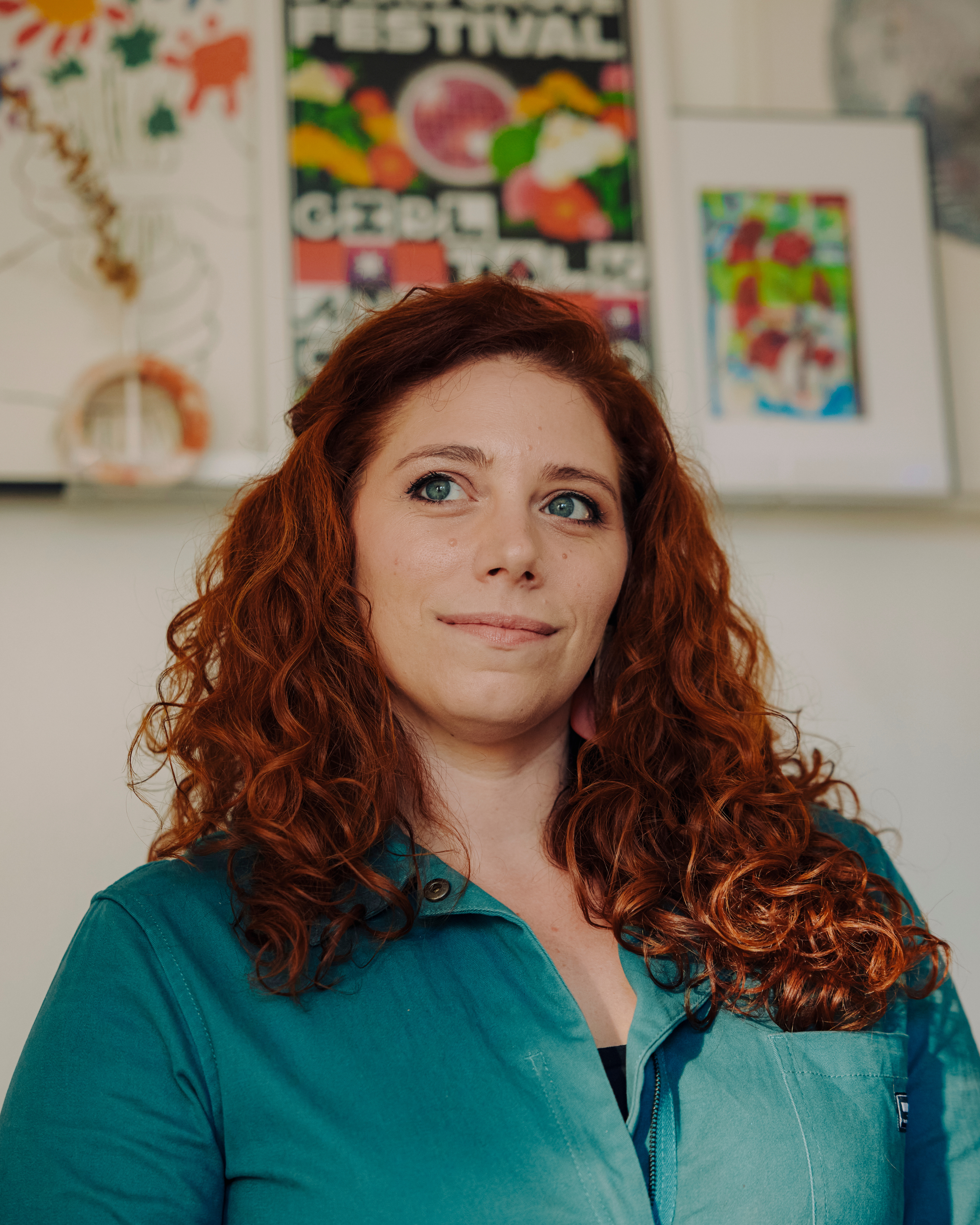
Hi, I'm Liz.
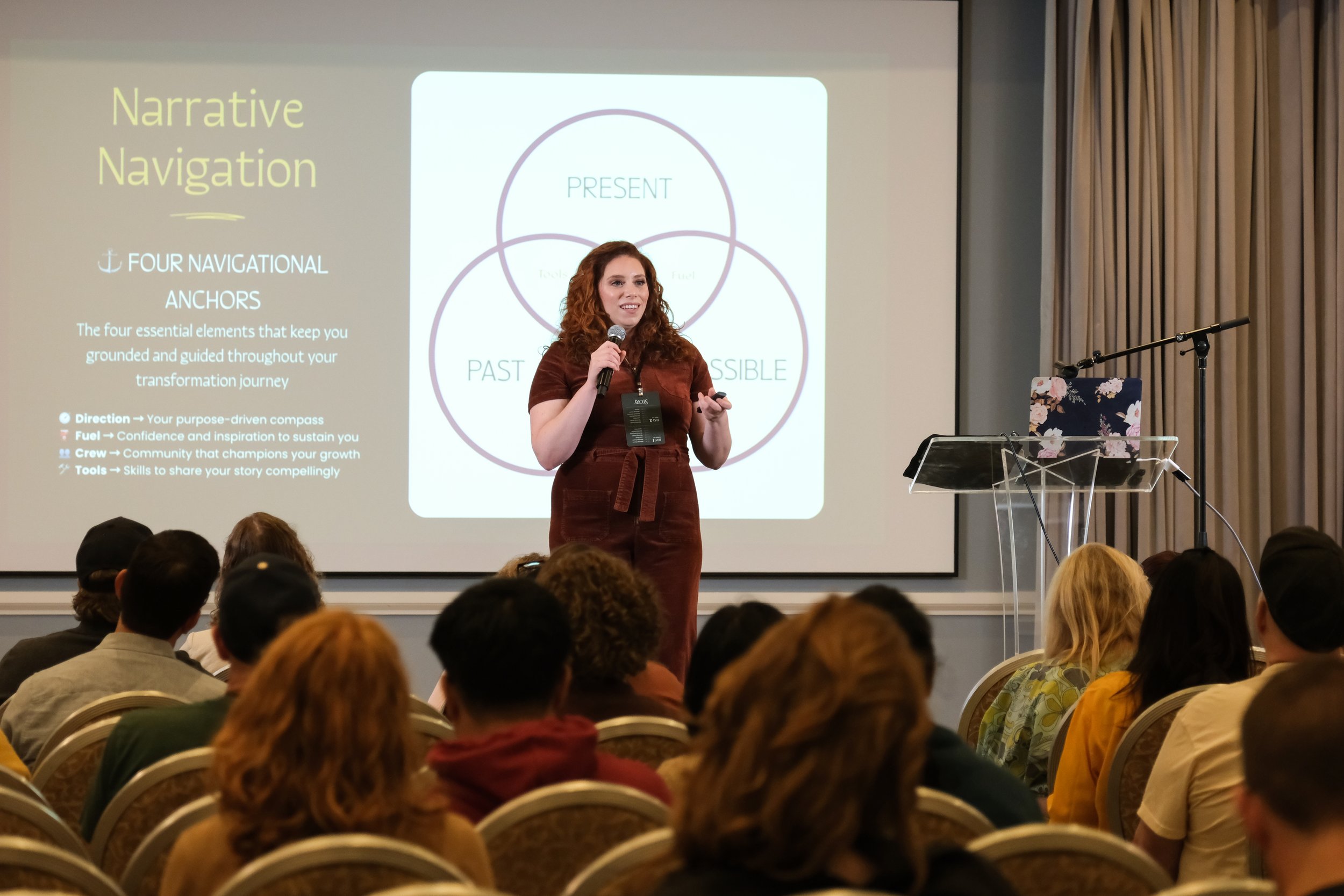
I am a Strategic Story Coach and I've spent my whole 20+ year career helping people tell their stories to create impact and change in the world. For fifteen years, I told other people's stories as a content producer on the Obama campaign, six years as a Global Creative Lead at Airbnb, and even one wild summer helping people find love on a Bravo dating show.
But then in 2020 I got laid off, and for the first time I had to turn to my own story for the first time. That is when it clicked. Our stories are not just memories of what happened. They are maps for what comes next.
Now through coaching, keynotes, and workshops with teams at Pinterest, Stanford and Deloitte, I help leaders and teams explore their stories so they can communicate better, connect to something deeper, and lead through change.
Because here's what I believe:
In the age of AI, your team's human story skill is your greatest competitive advantage. The teams that ask better questions, listen a little harder, and tell truer stories are the ones people remember, and fund, and follow.
FEATURED IN
THE WORK
How we work together
Every team is different, so every engagement gets built for the team in front of me. These are the shapes it usually takes.

Team Story Workshops
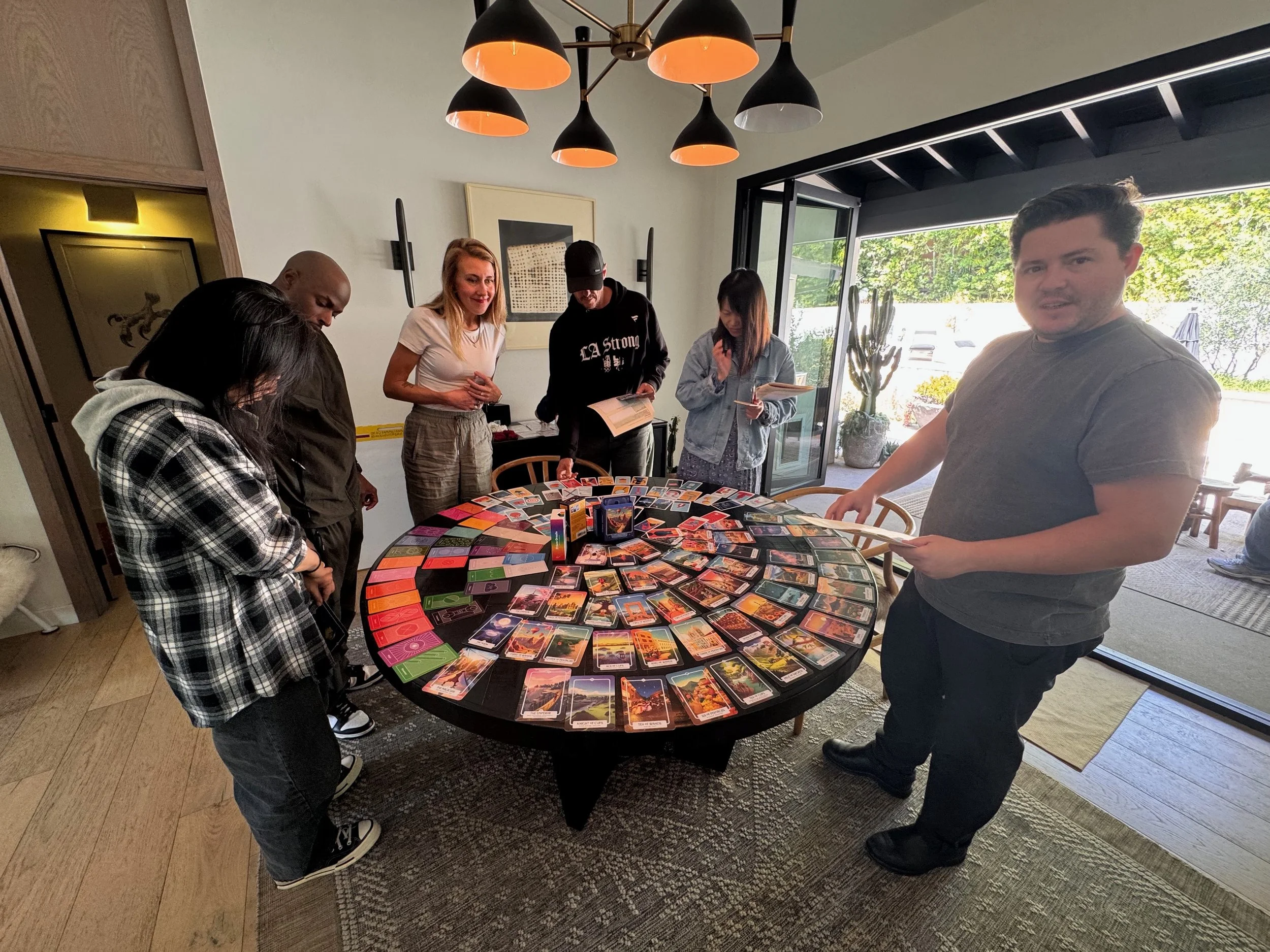
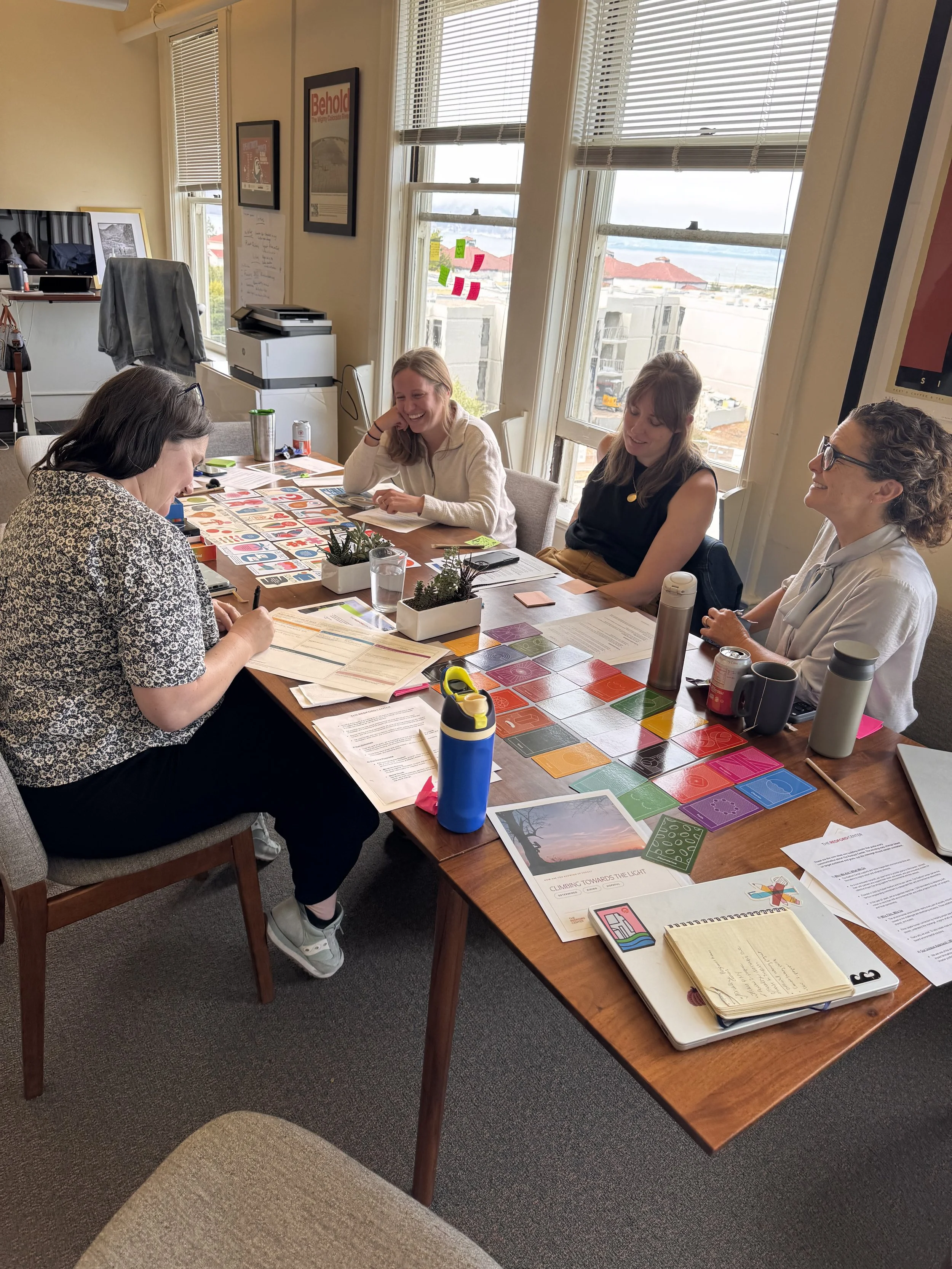
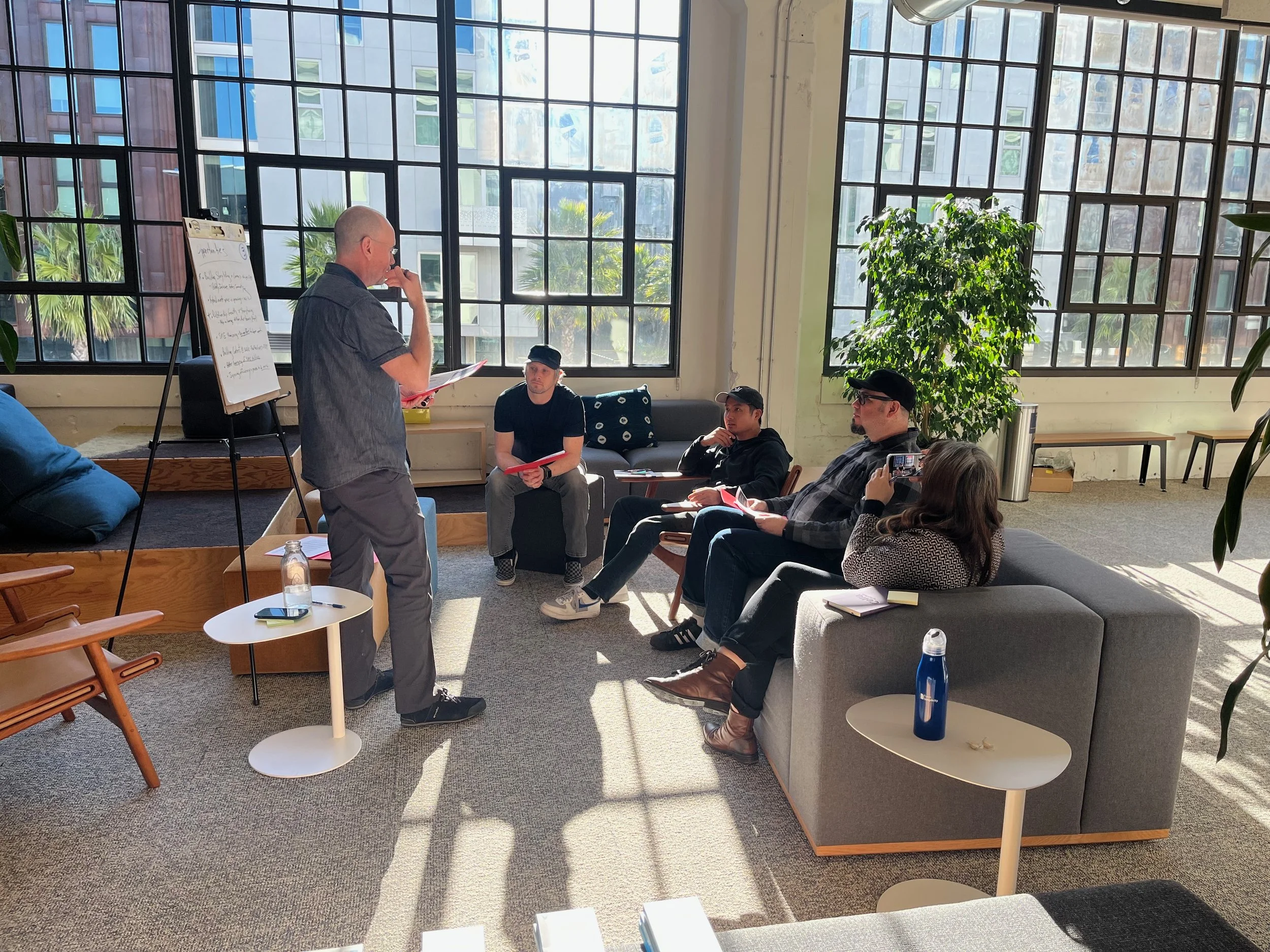
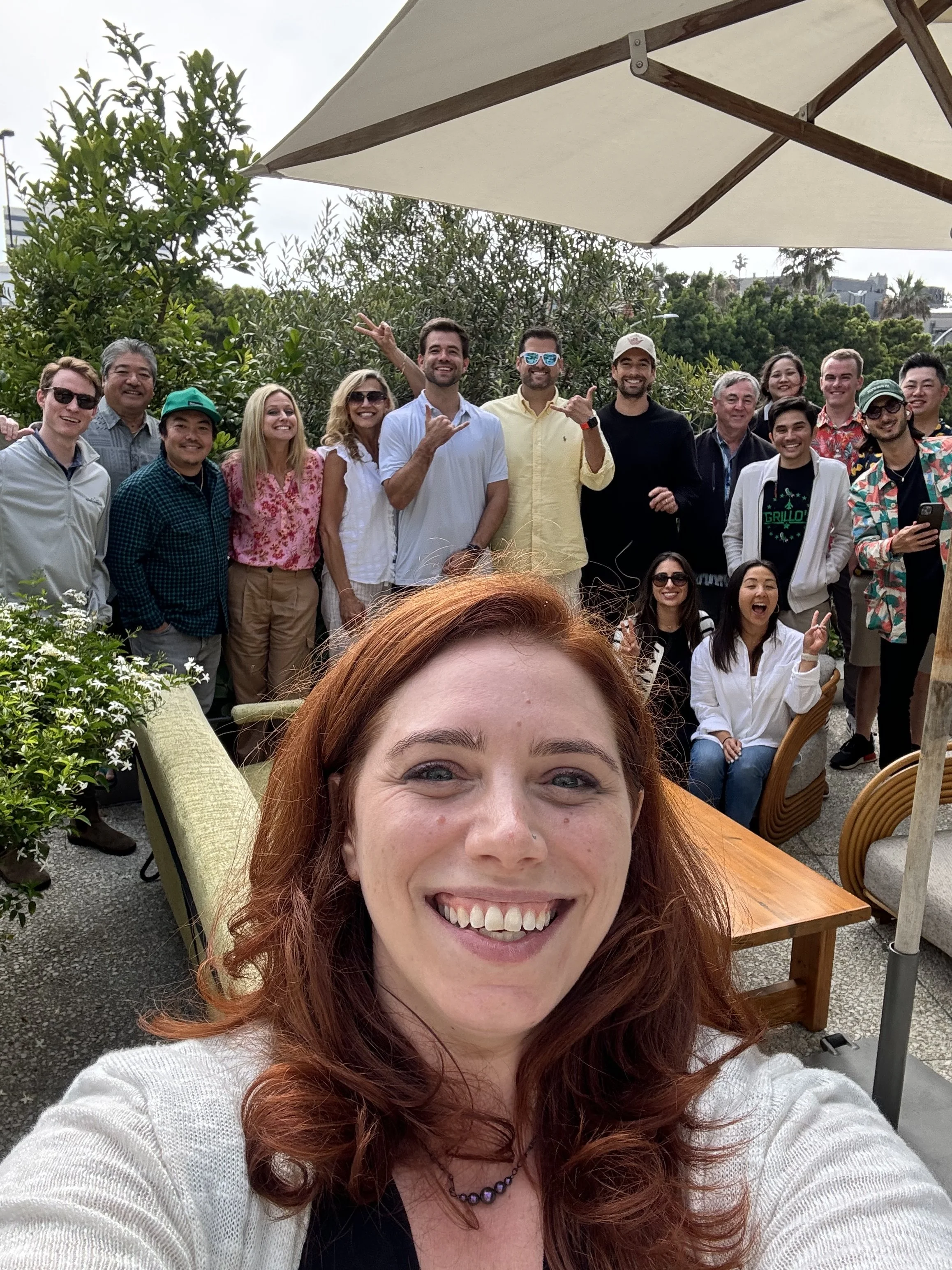
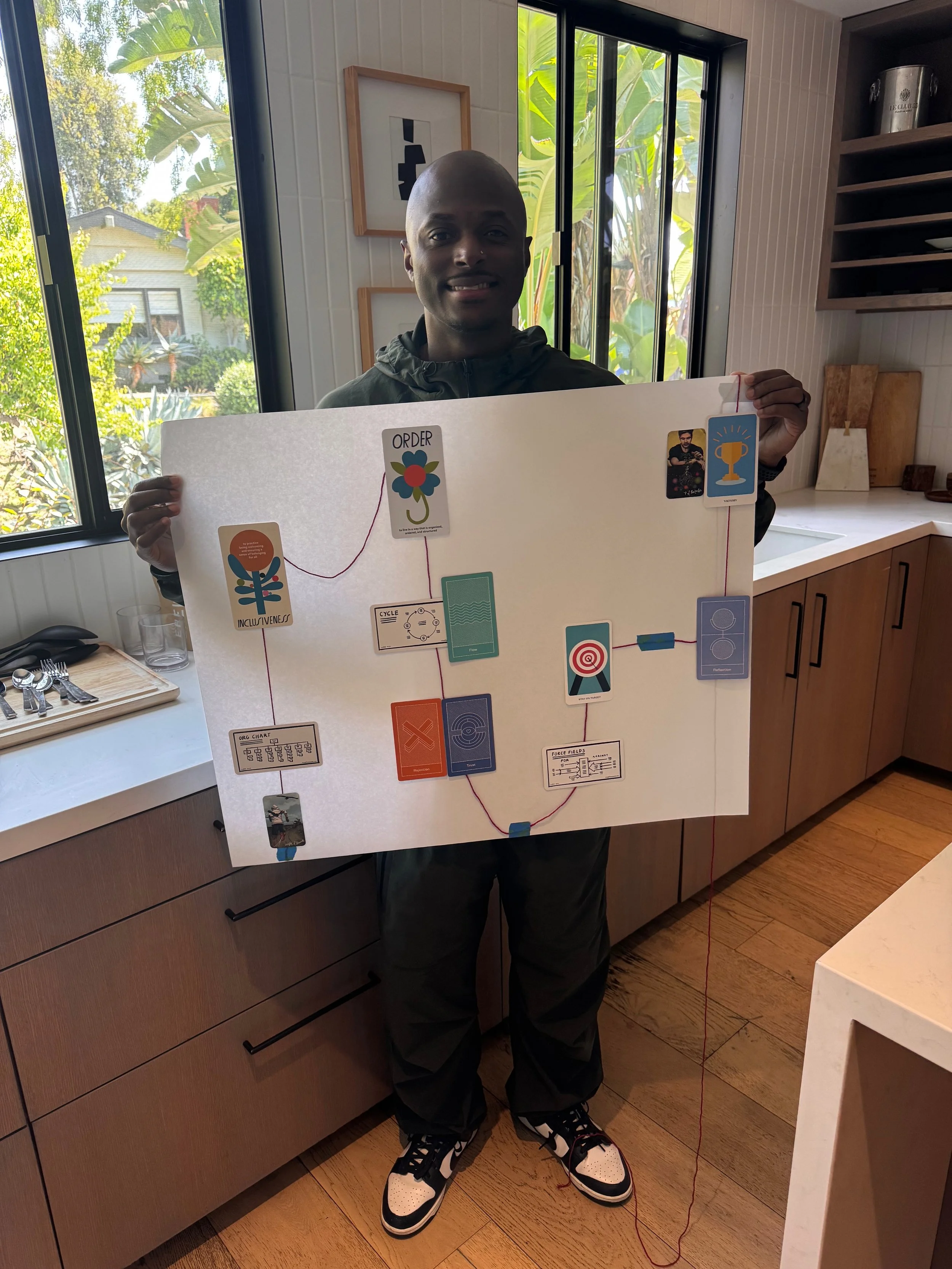
These are working sessions, not presentations. Your team is on their feet and at the walls, building real stories from their own work with cards, yarn, and actual conversation, instead of sitting through an hour of slides.
These workshops range from ninety minutes to multi-day team offsites. We can do them virtually over Zoom, or better yet, be in person. I am located in the Bay Area, CA, but can travel to support your team.
Lead with Story.
Core story skills for leaders who have to bring people with them. Everyone brings something they are already working on, a project launch, a team announcement, a funding pitch, and leaves having built it into a story that lands.
Story Before Selling.
How to use story to create connection that builds relationships and revenue. For the people who have to build a relationship before they can build a deal, this is the practice: the questions that open a real conversation, and the stories that make your work matter to the person across the table.
What's Our Team's Hi-Story.
How your team introduces and amplifies its own work. We are, we do, to achieve. By the end there is one shared way to talk about what you do, and every person has their own version of it in their own words, which is the part that makes it stick.
Story for Career Growth.
For performance review season and the career conversations that come with it. Your team finds the stories that show what they have actually done, names the superpowers underneath them, and gets clear on the impact they want to have on the team next
Story Events
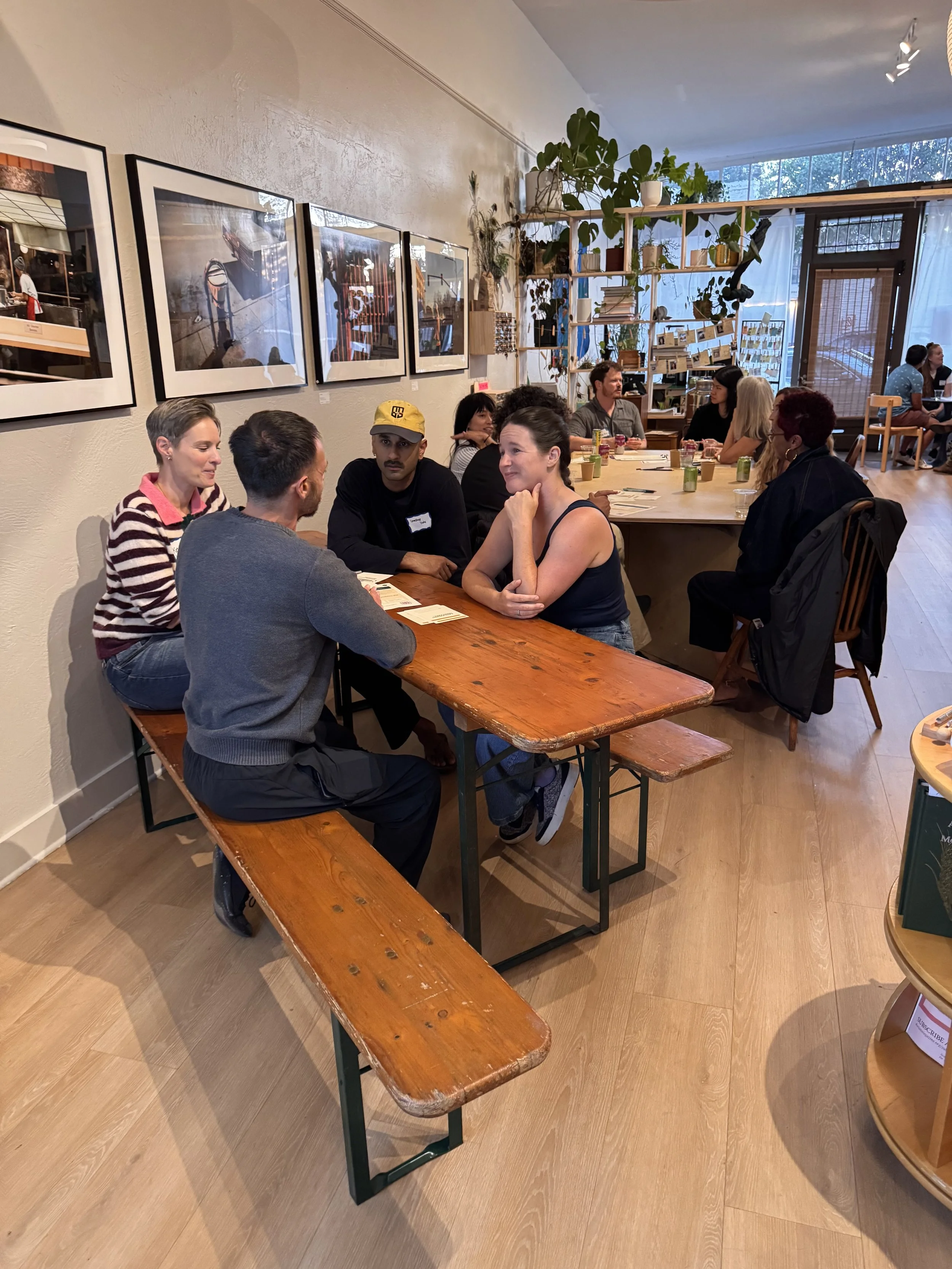
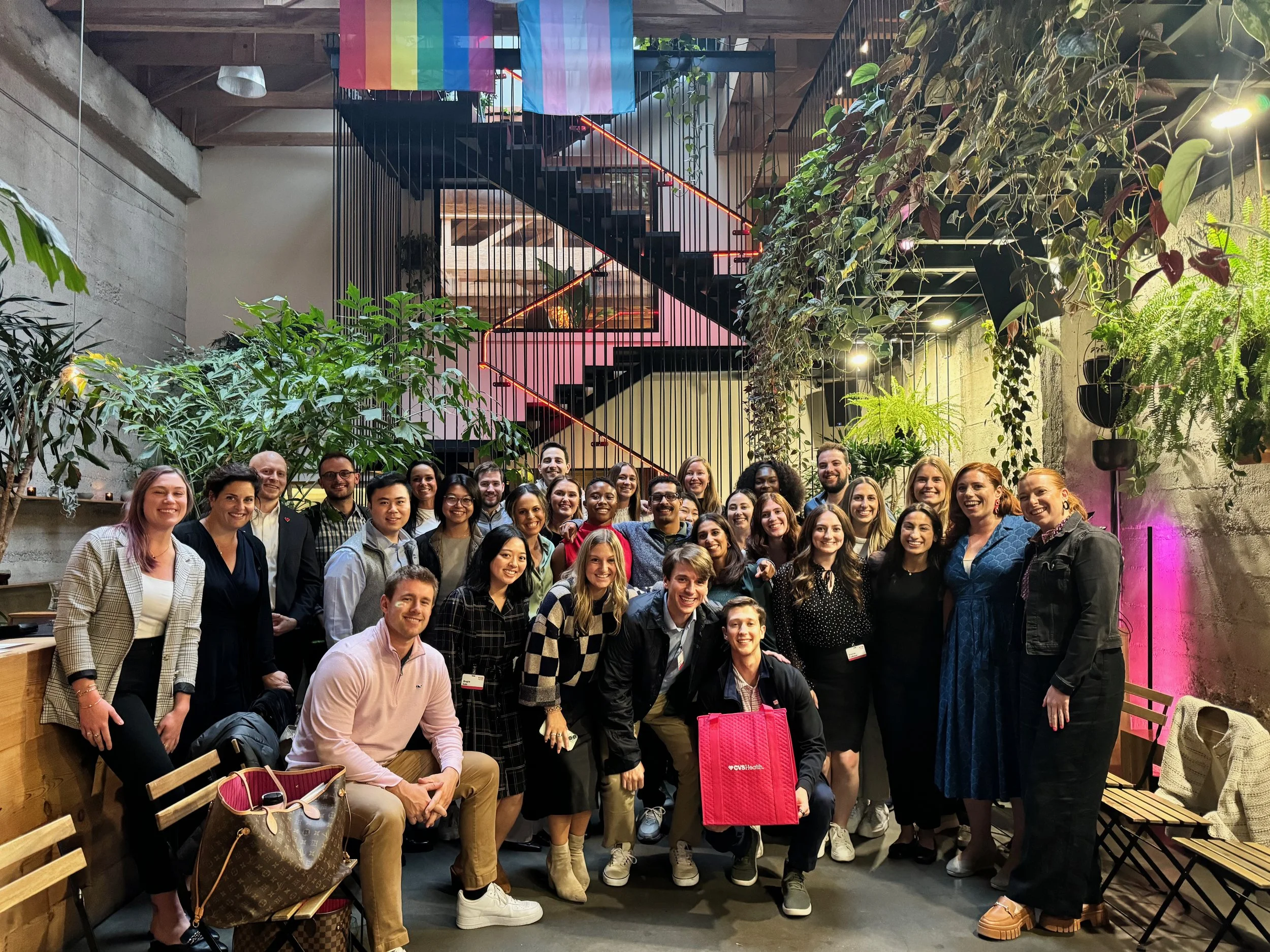
An fun evening rather than a workshop. A Story Explorers Salon or a story dinner, where the team connects as humans first and the skills come along for the ride. These work beautifully as the opening night of an offsite, or on their own when a team just needs to be in a room together.

Story Coaching Hours
One-to-one sessions for people on your team. The leader-level work, for the person preparing a keynote, a board presentation, or a hard conversation. Most teams add these onto a workshop. The workshop gives everyone the skill. The hour one to one is where a person finds the story they have been circling for months. They leave with a custom storybook of built out stories and ways they can use them.
Not sure which one? That is what the first conversation is for.
THE TAKEAWAYS
Your team leaves with more than a good day
Everyone on your team already tells stories at work. Some land. Most don't, and nobody can say why.
After a day together, they will know the science behind what makes an effective story. Plus they will know how to find the story that fits the moment, and how to make it matter to the person across the table.
Here's what they take with them.
01.) A Story Bank they own.
Real stories from your team, captured and organized so nobody starts from a blank page again. One team walked out with a bank of 45 stories and proof points they had never written down. This is the main deliverable and it outlasts the session by years.
02.) A real connection to their audiences and stakeholders.
A real human understanding of who they are actually talking to, what each of those people needs, and how the same true story gets shaped differently for a funder, an executive, a customer, and each other.
03.) Shared story language and frameworks.
This is the one leaders tell me about months later. From learning uncovering your shared thread with your audience using the Story Blueprint, to learning the neuroscience of effective storytelling and turning that into a Story Foundation, and then building out a full story using the Story House, and shaping your introductory Hi-Story, these frameworks are easy to understand and applicable to all types of communications.
04.) A storybook of your own session.
Spending time with your team is great, but often you forget what you talked about when Monday rolls around. That is why, with your permission, I record the workshop and send you get a designed recap that holds what your team said, the stories they told, and the frameworks in their own words. It is the thing people actually go back to.
05.) A foundational skill, not a one-time training.
This is the one that outlasts everything else on this list. Story is foundational, so it shows up in the way your team writes an email, the way they run a meeting, the way they build a campaign. They take it across their work and across their careers.
ON AI
I don't hide from AI. I put it to work.
Most storytelling training either pretends AI is not happening or treats it as the enemy. I do neither.
Here is how I think about it. AI is very good at the telling. It will draft your email, tighten your deck, and generate your hook. It is not good at the story, because it has not lived anything. It cannot tell you which of your experiences really mattered, or why. That part is yours, and it is the part that keeps your team worth listening to.
So we do the human thinking first. Then we let the tool help.
I record your session and turn it into a storybook.
Your team says remarkable things in these rooms and most of it evaporates by the following week. AI helps me capture all of it and shape it into something designed and readable that your team can actually refer back to.
I build AI tools on your team's own material.
Prompts and workflows made from your stories and your audiences, not generic ones. Teams use them to shape a story for a new stakeholder, prep for a board meeting, or get a first draft moving when the blank page wins.
I teach your team how to use them without handing over the thinking.
That is the whole skill. Use AI to organize what you found, capture what you said, and get it into a cleaner shape faster. We don’t use it to decide what your story really means, or why your audience should care.
One team told me the AI exercise was the most useful part of the workshop. Another said they had all been scratching the surface of AI, and this was the thing that finally bumped them up.
WHAT BECOMES POSSIBLE
A team of Story Explorers moves differently
Picture your team six months from now.
The person who used to freeze in front of the executive team walks in with a story ready, and it really connects. Nobody starts from a blank page, because there is a bank of stories everyone can reach for. And the work your team has been doing quietly for years is finally recognized by the people who fund it, buy it, and decide about it.
That is the difference between a team of storytellers and a team of Story Explorers. Storytellers wait for the moment to perform. Story Explorers are curious about the stories that shape them, and find the stories that matter by constantly asking better questions. They are already listening, already collecting, already connecting today's work to where the team is going.
Because the teams that stand out will be the ones who can still find the human thing underneath the work and say it in a way people believe.
Most teams are focused on the telling tactics. Yours could be exploring and connecting.
START HERE
Let's talk about your team
Every engagement starts with a conversation. Not a pitch. A working session, where you tell me what is going on with your team and I tell you honestly whether I am the right person for it.
Tell me a little below and I will come to the call already thinking about your team.
I read every one of these myself and reply within two business days. I take a limited number of team engagements at a time, so if your date is close, say so and I will tell you straight away whether it is possible.
I’m excited to connect and hear more about your team and the stories you want to activate!
Liz
Still have questions?
-
A working session where a team finds and builds the real stories inside their own work, using simple, repeatable frameworks that help them pull out meaningful details and lessons that make people care. My workshops run ninety minutes to a full day, in person or virtual. When we’re in person, your team is on their feet, at the walls, building with cards and yarn and actual conversation. When we’re virtual, we use breakout rooms, interactive chat games, and worksheets to keep the session fun and interactive. They leave with a Story Bank of their own material and a set of frameworks they keep using.
-
Yes, with a difference. Storytelling is two words. Telling is delivery: how you craft the deck, the talk, the post, and it is the part AI is getting very good at. Story is everything underneath it: pausing to get curious about what actually happened, what it really means, and why anyone should care. Most training covers the telling, the tactics and the polish. I run a story workshop because the part that is broken is almost always upstream of the delivery. We take a pause from your busy day-to-day to go deeper and build a foundational skill that can be applied across all your work, from how you write an email, engage in a networking event, or shape a town hall.
-
Most training goes straight to delivery, which is the part you polish. It skips the harder question underneath, which is what are we actually trying to say. You cannot polish a story you have not found. We do the exploring first, and use that to guide the direction of how we put our stories out into the world. Then we cover useful frameworks for how to shape your stories that can be applied to any kind of communication channel. This is the part almost nobody makes time for, but it’s the part that builds a solid foundation for making sure your message moves your audience to take action.
-
A working session. Nobody sits through an hour of slides. Your team builds real stories from their own projects and talks to each other, which for most teams is the part that has been missing. If you are looking for more of a keynote, I do those too, but I always weave in interactive elements, and prefer to pair it with a workshop so people can immediately apply what they’ve learned.
-
The Three Elements of an Effective Story and the neuroscience behind them. I show you how to create a mental movie, spark a human connection, and tailor the story for your audience.
The Story Blueprint helps you understand what you are trying to get out of a story opportunity, get to know your audience and what they need right now, and find the shared thread that connects your goals so that you can craft a story that speaks to the things you connect on. It is the framework that makes Me + You = Us
The Story Foundation is the story planning sentence that people remember years later: it's a story about what happened (ACTION), but it's really about what it means (EMOTION), and you should care because of the impact you want to have (IMPACT).
The Story House is how we build the full story out with all the right structure and details to take our audience on a journey that moves them to take action at the end. We take everything we’ve learned from the Blueprint and Foundation, then build the structure of the story with the Story Scaffold, Walls (data), Windows (details) and Doors (asks).
The Hi-Story is always a favorite. That is the framework for how to introduce yourself in a way that builds credibility, creates connection, and sparks curiosity so that you can engage in better conversations. It also helps you get clear on the bigger impact you want to make in the world. I am / I do / To achieve or We are / We do / To achieve.
-
Five things: a Story Bank they own, a real understanding of their stakeholders, shared language and frameworks, a designed storybook of their own session, and a foundational skill they use in emails, meetings and campaigns long afterward.
-
Yes. I create workshops that can be delivered virtually or in person. They are great for a team offsite or for ongoing professional development.
I’ve done dozens of virtual events and know how to use the format to keep people engaged. We use breakout rooms, chat games, and worksheets to keep the momentum going so it is not one more boring training
If we can be in person, we make sure to make the most of your precious time together. In person is better for the story dinner and salon formats, where being in a room together is the point. I am based in the Bay Area California (San Francisco, Oakland, Berkeley) but can travel anywhere in the world to support your workshop.
-
I’ve done workshops with as few as two people and as large as 100+. We can work together to tailor the workshop to your group and make sure everyone gets the most out of the time together. If we have a large group, but you want more personalized attention, we can split the workshop up into smaller cohorts. I’ve seen this work particularly well.
-
Yes, and often. Environmental nonprofits, mission-driven organizations, foundations, public agencies. The work is the same, but I offer special non-profit and public sector rates.
-
Most team engagements land between $5,000 and $25,000, depending on format, length, and how many people are in the room. I offer nonprofit and public sector rates. And if you have a budget that sits outside that range, tell me the number rather than not asking. I can work with you to build an option that fits your budget.
-
I would be honored to bring a story workshop into your team! The first step is to have a conversation so I can learn more about your team, your story challenges and needs, and chat about some logistics. Please fill out this form and I will reach out within two business days to set up a call or talk next steps.